This iPod Touch app was built for Susan Tupper‘s clinical study. PInGo was used by children with chronic pain, allowing them to fill out an electronic survey to show how they feel at different times of the day. The app I built with Tupper investigated the intensity of the participant’s chronic pain at different intervals in the day. The study took place in July of 2010.
PInGo was installed in a number of iPod Touches for the different study participants to use. We also made sure to meet privacy requirements by not storing or sending any personal information.
The first screen capture below is the main menu which allows the user to select a survey depending on the time of day and whether they have completed it or not. The screen captures that follow demonstrate the variation in the survey’s question formats used. We were able to create an intuitive and dynamic interface, making use of the touch screen, shake gestures, show/hide animations, and question dependencies.
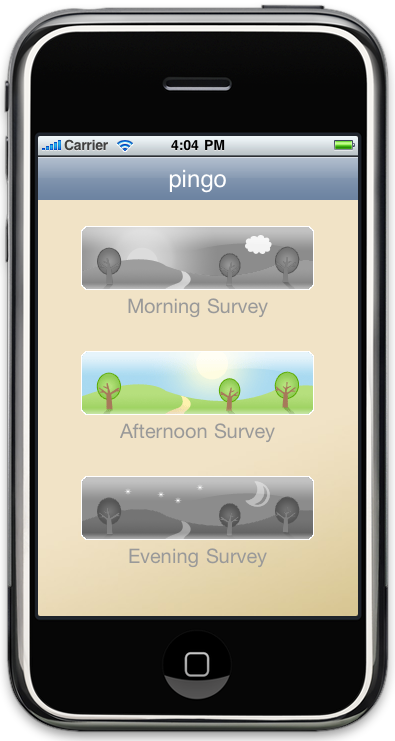
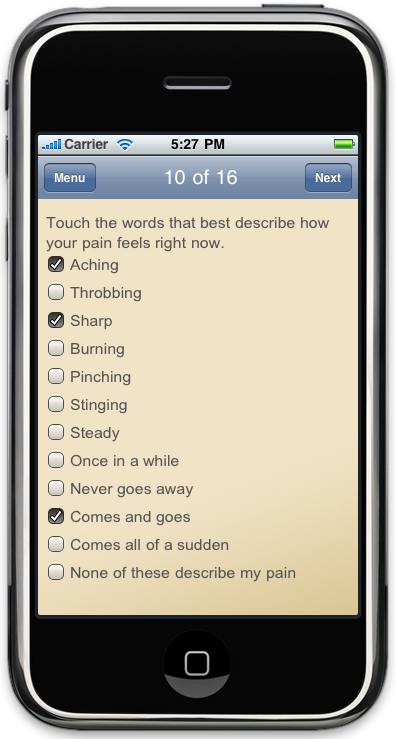
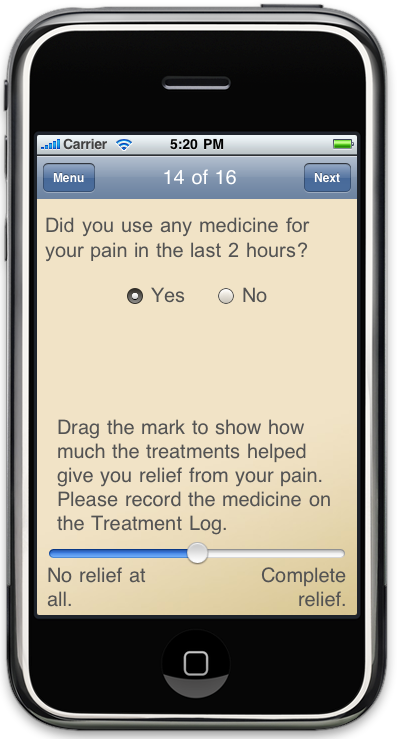
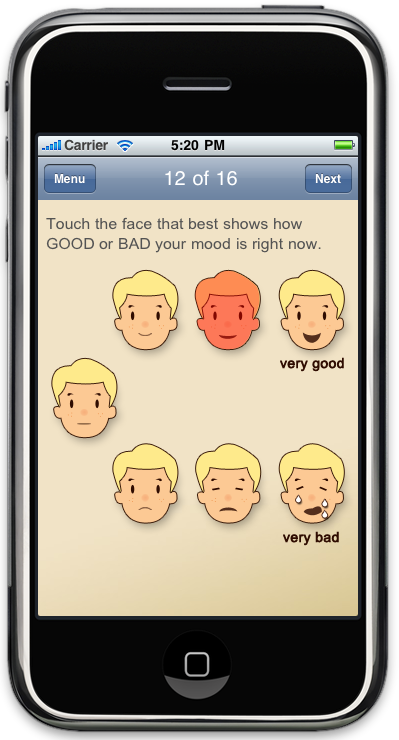
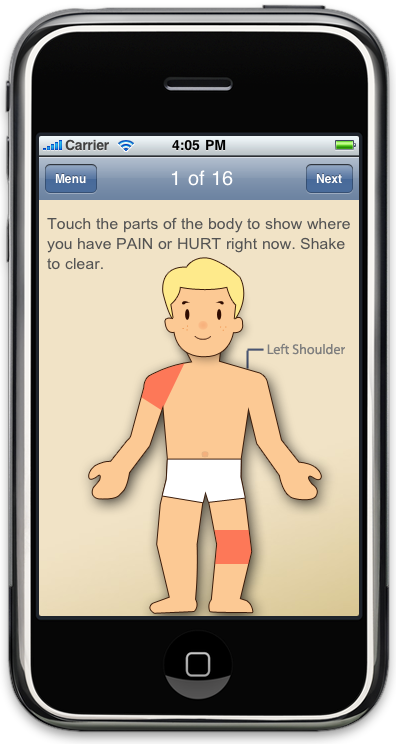
The technical cost to run this study was about $4/month, with no server hardware to purchase since we’re using a Cloud Computing Service. The iPod Touches were from our MADMUC Lab. There was a chunk of time spent on researching the different technologies, setting up, developing the server side and client side, and designing and implementing the application’s graphics. The system has been pilot tested, tweaked, with the known bugs ironed out. If you are an academic or commercial researcher in need of a similar mobile app I would be interested in hearing your thoughts, feel free to contact me.
The technologies I used include RackSpace for storing the data collected & Appcelerator Titanium for developing the iPhone OS app. A simple Webmachine RESTful API server (Erlang and Mochiweb-based) running in the cloud for collecting the data. The data could be easily exported to a spreadsheet application like MS Excel or Google Spreadsheet, where it can be manipulated to your needs. The iPod Touch client app sent the data when it has a WiFi connection, but if there is no WiFi connection it just stored the data locally, allowing the user to continue entering new information. The technologies were chosen primarily due to their simple, speedy, and flexible development cycles, and secondly because of my familiarity with Erlang and Web standard technologies (HTML, Javascript, and CSS). The original mobile client app was developed using Titanium 0.8, but it was re-written from scratch in two days to the improved version 1.3. All the illustrations were done by Shi Shi, a fellow MADMUC graduate student.
I learned much from this project and it is a great feeling to know that the system was used for a worthy research cause. Thank you Susan Tupper for envisioning the project and Prof. Ralph Deters for giving me the opportunity to work on this project.
UPDATE: The following poster of the PInGo project was presented at the Canadian Arthritis Network 2010.
[scribd id=40736465 key=key-2imd7rglzfzrwjs4fg2l mode=list]